Bone, Infection & Trauma
When Wounds Won't Heal, Oxygen Can.
Non-healing wounds are among the most common reasons physicians refer patients to hyperbaric oxygen therapy — and with good reason. By supersaturating the blood with oxygen at therapeutic pressure, HBOT restarts the healing cascade in tissue that has stopped responding to conventional treatment. It is one of the most evidence-backed applications of HBOT, and it is covered by Medicare and most major insurance carriers.
How HBOT heals wounds
Healing requires oxygen. HBOT delivers it.
Wound healing depends on oxygen at every stage — from immune cell function and collagen synthesis to the growth of new blood vessels. When wounds fail to heal, it is almost always because the tissue is chronically hypoxic: starved of the oxygen needed to complete the repair process.
Hyperbaric oxygen therapy at 2.0–2.5 ATA supersaturates blood plasma with dissolved oxygen, driving it deep into hypoxic tissue regardless of compromised vasculature. This triggers several mechanisms simultaneously: angiogenesis (new blood vessel growth), fibroblast proliferation, enhanced antibiotic efficacy, and improved post-ischemic tissue survival.
The result is measurable healing in wounds that have failed to respond to standard wound care, debridement, offloading, or other interventions — often over months or years.
>50%
reduction in amputation rates for diabetic wound patients receiving HBOT
#1
most common reason physicians refer patients to hyperbaric oxygen therapy
✓
Medicare & most major insurers cover wound care HBOT
100K+
patient treatments completed at Bay Area Hyperbarics over 26 years
Conditions we treat
Wound and tissue repair conditions at Bay Area Hyperbarics
Click any condition to read the research, understand what to expect, and hear from patients.
Insurance covered
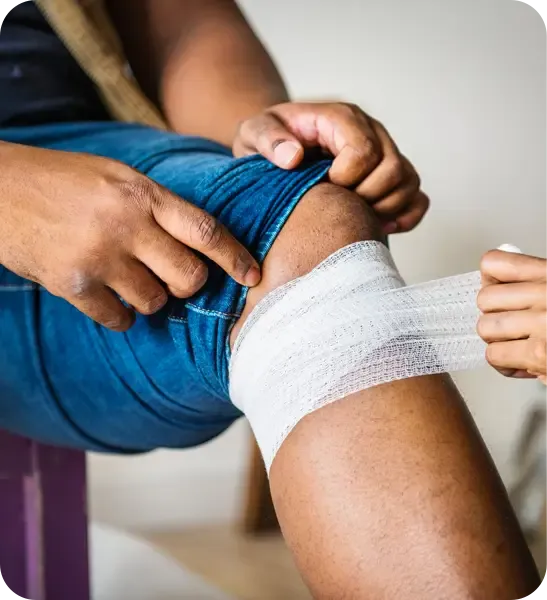
Non-Healing Wounds
The most common HBOT referral diagnosis. Problem wounds — those that fail to progress through normal healing phases — respond consistently to HBOT. HBOT increases neovascularization, is bactericidal, and improves post-ischemic tissue survival.
Insurance covered
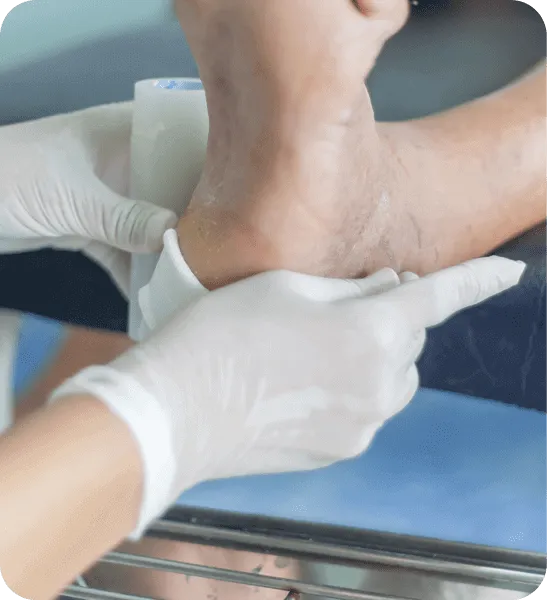
Diabetic Wounds & Foot Ulcers
Medicare approves HBOT for diabetic wounds. Studies show it reduces the requirement for amputations by more than 50% and significantly decreases morbidity. Diabetes impairs every stage of wound healing; HBOT addresses the root cause — tissue hypoxia.
Insurance covered
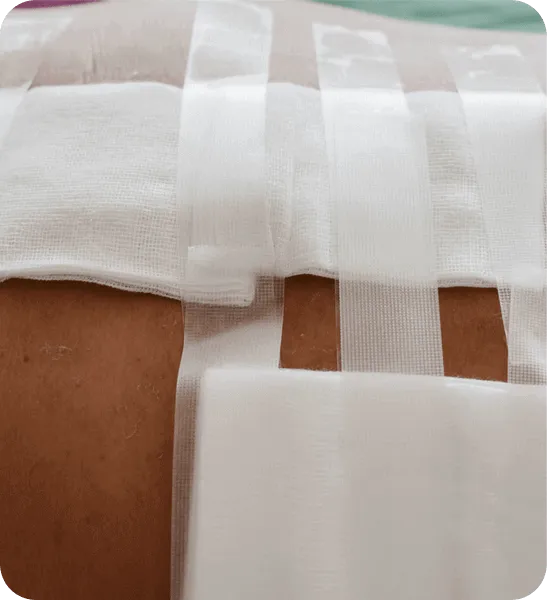
Compromised & Failing Grafts and Flaps
When surgical grafts or flaps fail to integrate — due to radiation injury, diabetes, infection, or poor vascularity — HBOT supports salvage and healing. Studies over two decades show strong outcomes even in complex cases with multiple complicating factors.
Insurance covered
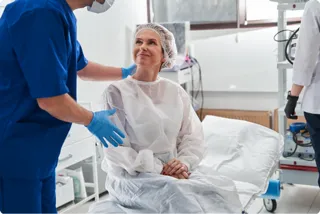
Post-Surgical Recovery
When surgical incisions fail to heal due to diabetes, poor circulation, or infection, HBOT accelerates recovery by delivering high concentrations of oxygen directly to compromised tissue. It reduces infection risk, shortens healing time, and improves outcomes.
Call us
Thermal Burns
Tissues surrounding burn injuries often become hypoxic. HBOT oxygenates both burned and surrounding tissue, helping viable tissue heal and reducing the depth and spread of burn damage. It also reduces edema and infection risk in acute burn management.

Self-pay
Scleroderma
Scleroderma causes progressive tissue fibrosis and vascular insufficiency, leading to marginal, ischemic wounds that resist standard treatment. HBOT delivers oxygen to these poorly perfused areas and accelerates wound healing in affected patients.
Insurance & Medicare coverage
Wound care is our most commonly covered category.
Non-healing wounds, diabetic wounds, failing grafts and flaps, and post-surgical healing complications are all recognized by Medicare and covered by most major private insurers. If your wound qualifies, many patients pay little or nothing out of pocket.
We handle 100% of the prior authorization process.
Our Patient Care Coordinators contact your insurance company, obtain prior authorization, and coordinate your treatment plan at no charge. We do not determine whether you qualify — your insurance company does. Our role is to advocate for you as effectively as possible and remove every administrative barrier between you and your treatment.
Other facilities may not be able to bill insurance for wound care.
Medicare and most private insurers require that treating facilities meet specific clinical and credentialing standards. Many independent HBOT clinics do not meet those standards and cannot bill insurance at all. We do — and we always have.

Schedule a free phone consultation
Our team will review your wound history, check your insurance coverage, and answer every question you have.
